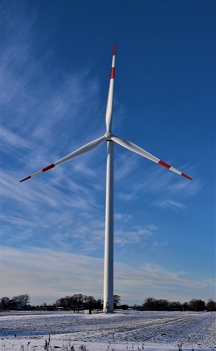
Wind power or wind energy is the use of wind turbines to generate electricity. Wind power can be primarily characterized by its renewability, sustainability, and low carbon footprint in comparison to fossil fuels, with most of that footprint resulting from the process of constructing the windmill. A wind farm refers to a collection of multiple individual wind turbine modules connected to a electric power transmission network, or power grid.
Wind energy accounted for 5% (roughly 1600 TWh) of total electrical generation worldwide in 2020, and 2% of worldwide energy consumption. China in particular has made huge expansions towards its wind energy infrastructure, contributing much to the over 100GW of wind energy added during 2020. The world stands at more than 730GW of global wind power capacity, but in order to meet Paris Climate Accord agreement goals to limit climate change, analyists insist that it needs to expand much faster, at at least 1% of electricity generation per year.
The output of wind power is inherently variable due to changing weather patterns, and power draw required from it also varies depending on how much power is being demanded, so various power-management techniques have been adopted to match this discrepancy in supply and demand. Some energy-storage facilities store this energy in capacitors or massive lithium-ion batteries for later deployment when demand rises. Wind energy may also be exported from its primary area to another to shore up supply shortages or deal with an excess in supply. Weather predicting can also allow a general estimate of the energy yield that can be expected from wind energy in a specific area over a specific time, and energy providers can take steps to be prepared for this predictable variation in energy production.
Onshore (on-land) wind farms cost less than new coal or gas plants, but subsidies for those industries hamper wind power expansion. Onshore wind farms aesthetically affect landscape more than other powerplants, as they must be distrubuted over a greater amount of land and generally must be built in rural areas. For rather isolated or off-grid locations, local wind farms can provide energy deployment without having to pull energy from any pre-existing electrical infrastructure. Offshore wind farms provide greater energy than onshore wind farms, but the increase in construction and maintenance costs they entail makes them a comparatively less popular option.
Here is a quote from the US Office of Energy Efficiency & Renewable Energy:
"Wind energy is affordable. As wind generation agreements typically provide 20-year fixed pricing, the electric utility sector is anticipated to be less sensitive to volatility in natural gas and coal fuel prices with more wind. By reducing national vulnerability to price spikes and supply disruptions with long-term pricing, wind is anticipated to save consumers $280 billion by 2050."